N.J. public workers are about to face their most shocking health insurance bill ever

Public employees in New Jersey will pay as much as 36.5% more in health premiums next year, in what is the clearest sign yet of the peril facing the insurance programs for hundreds of thousands of local, state and school workers.
AON, a health insurance consultant, and officials in Gov. Phil Murphy’s administration announced on Wednesday that premiums in the State Health Benefits Program serving county and local workers will rise 36.5%. State workers will see a 21% increase and members of School Employees’ Health Benefits Program 29.7%.
This would be the fourth consecutive rate hike borne by public workers and the most expensive yet. Over the last five years, premiums have risen 115% for people in the local government portion of the State Health Benefits Plan, 73.9% for members of School Employees’ Health Benefits Commission, and 67% for state workers on the state plan.
AON, a consultant hired by the Murphy administration, announced the recommended increases during meetings with the plans’ representatives in Trenton Wednesday.
The committees governing all three plans will have to vote whether to adopt the suggested increases, but there aren’t obvious alternatives to head off the spike in premiums for 2026.
AON attributed the escalating premium costs to employees and their families using their health coverage more frequently, and a dramatic rise in medical inflation — what hospitals, physicians and drug companies charge for treatment. The popularity of the diabetes and weight loss drugs like Wegovy and Zepbound is driving the costs of prescriptions, according to AON’s analysis.
AON recommended the rate increases, but the plans must vote to accept them.
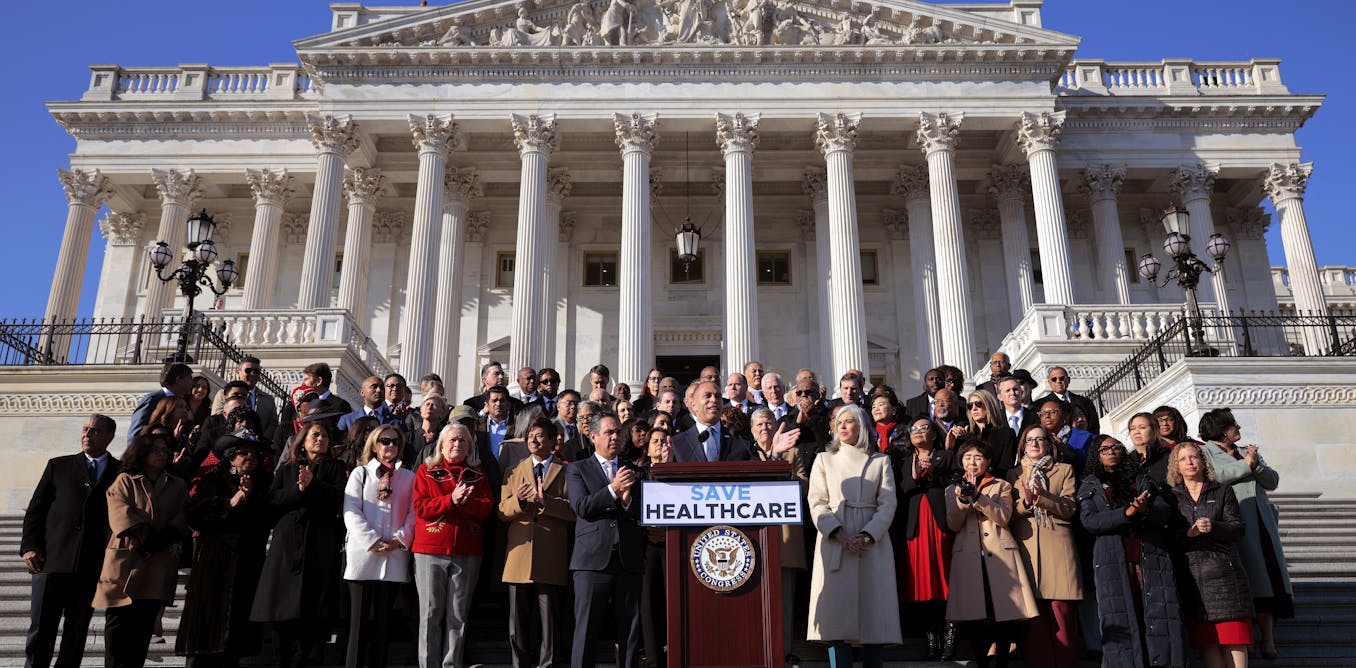
Unions have held rallies outside the Statehouse to demand lawmakers introduce legislation to cap costs and base reimbursement rates on Medicare, the national health program for older and disabled people. So far, no one has taken up the issue.
Last month; Murphy, state Senate President NNick Scutari, D-Union, and state Assembly Speaker Craig Coughlin, D-Middlesex, agreed that the health plan design committees would identify $100 million in savings by the end of the year, or a smaller panel of three would recommend ways to reduce the costs of health care. The deal, revealed just days before state lawmakers passed the new state budget, incensed government workers.
The local government portion of the program is in the worst financial shape. Nearly 80 municipalities and counties that could find a more affordable deal have dropped out of the state plan and found coverage elsewhere as costs escalated. Those government entities that remain most likely contain an unhealthy pool of members, which further drives up premiums.
The state has had to loan the local portion of the program $258 million since November because paid claims have exceed premiums, according to a report released by the state Treasury Department in May. The local government plan owes the state about $150 million, AON’s announcement said.
The insurance program for public school employees showed the highest cost overruns, with $143 million in 2024 and $254 million in 2025, according to the Treasury department.
Educators will not feel the effects of the premium hikes as acutely as county, state and municipal employees. Their contract requires they only pay a percentage of their salary towards health benefits. But whatever isn’t covered by employees will be shifted to school districts and taxpayers.
Sean Spiller, president of the New Jersey Education Association, said he was “extremely frustrated by the steep increases.”
“It’s beyond time for the state to show up and work with us, because lack of affordable health care hurts everyone in New Jersey,” Spiller said.
State PBA President Peter Andreyev blamed the increases on the “lack of leadership in the State Health Benefits plan and the inability of the state to control healthcare costs” as well as the “unholy alliance between the (insurance) carriers and the hospital networks.
Steven Tully, representing the American Federation of State, County and Municipal Employees, called the rate increases “unacceptable and further proof that the current system is broken.”
“The answer is not to continue to shift costs onto workers and taxpayers, but to initiate genuine, common sense reforms that will bring about cost savings, transparency, and accountability,” Tully said.
Billy Gallagher from Communications Workers of America, District 1, predicted that many of the “tens of thousands of hardworking New Jerseyans who go to work serving their communities, will not stick around.
“The state repeatedly has rejected, stonewalled or slow-walked reforms that would lower costs for everyone. It continues to make public employees, especially in local government, collateral damage,” Gallagher said.
A typical local government employee earning $65,000 is paying nearly $9,500 a year for a family health plan on an annual basis, according to CWA communications coordinator Moira Bulloch.
Republicans, the minority party in the state Legislature, pounced on the announcement, blaming Democrats for “completely mismanaging” the health program and the state budget.
“Now they’re expecting taxpayers and our dedicated public workers to pick up the tab for their failures with a 37% increase in their healthcare costs with the empty promise of finally fixing this long-overdue problem that they have ignored for years,” state Senate Minority Leader Anthony Bucco, R-Morris, and Senate Budget Officer Declan O’Scanlon, R-Monmouth, said in a joint statement.
The annual cost of public worker coverage in New Jersey was $22,000 in 2023, the Treasury report from May said. That’s 60% more than average cost of private and public sector plans nationally.
There are about 310,000 educators, retirees and their dependents in the teachers’ plan and 450,000 state, county and local government workers and retirees in state health benefits program, according to Treasury officials.
Linda Schwimmer, president and CEO of the New Jersey Health Care Quality Institute, a consumer research nonprofit, said the stability of the insurance plans won’t improve until the state and union officials makes some major changes.
The state insurance programs must slow down the exodus of local governments leaving the program and negotiate drug prices more competitively, Schwimmer said. As it is, the rapid consolidation of hospitals and medical practices over the last 15 years has played a role in allowing costs to rise, she said.
“Until the state truly manages the program, this free fall will continue,” she said.
Our journalism needs your support. Please subscribe today to NJ.com.
Susan K. Livio may be reached at [email protected]. Follow her on X @SusanKLivio.
If you purchase a product or register for an account through a link on our site, we may receive compensation. By using this site, you consent to our User Agreement and agree that your clicks, interactions, and personal information may be collected, recorded, and/or stored by us and social media and other third-party partners in accordance with our Privacy Policy.
link