[Interview] Doctor-turned-lawmaker warns Korea’s healthcare nearing point of no return < Policy < Article
![[Interview] Doctor-turned-lawmaker warns Korea’s healthcare nearing point of no return < Policy < Article](https://cdn.koreabiomed.com/news/thumbnail/202601/30202_32435_2522_v150.jpg "[Interview] Doctor-turned-lawmaker warns Korea’s healthcare nearing point of no return < Policy < Article")
Korea’s healthcare system, already weakened to its limits through the government-doctor conflicts, has been shattered. The government’s slogan of “saving regional, essential, and public healthcare” no longer holds sway in the medical field. This was starkly evident in the results of the 2026 first-half recruitment of trainee doctors. The application rate for residency programs, particularly in unpopular specialties, hit rock bottom. Without a proper diagnosis of why the medical system broke down, the stigma of “emergency room shuttle” will be repeated.
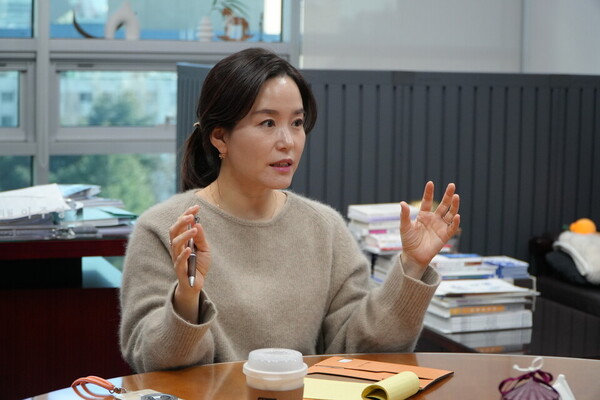
The government continues efforts to piece together the fragmented medical system, but the outlook remains pessimistic. Even within the National Assembly, which had been busy preparing legislation to strengthen “regional, essential, and public (REP)” healthcare in line with the government’s policy direction, skeptical voices are emerging. Rep. Lee Ju-young of the New Reform Party, whom KBR met at the National Assembly last year-end, also expressed frustration. This stems from the concern that medical policies are becoming fragmented and hollowed out, lacking a comprehensive vision that encompasses “REP healthcare.”
Rep. Lee asserts that this trend cannot be the solution to revive the REP healthcare. She criticizes that, while the law may pass, there is no concrete blueprint for how it will function in practice. Since the Regional Doctor System Act was passed by the National Assembly last Dec. 2, there remains a void in agreements regarding the scope of national responsibility and the sustainability of finances and personnel. Consequently, despite constant proposals for solutions, the medical field appears unable to find its footing.
The alternative proposed by Rep. Lee is clear. She argues that restructuring centered on national university hospitals is essential to revitalize healthcare in provincial areas. Lee believes that without concentrating personnel and finances around existing infrastructure, rural areas, primary care, and public hospitals cannot be restored. Emergency medical care is no exception. She emphasized that the debate surrounding emergency medical services and the 119 transport system must also be reexamined from the outset of institutional design.
Lee compared Korea’s healthcare system to an “endangered species.” She warned that without structural reform, the nation risks reaching an irreversible tipping point.
Question: Following last year’s major policies, such as the public medical school debate and essential care-supporting policies, these issues will likely be discussed again this year. There is also hope that the healthcare system might reach a new inflection point. How do you forecast the 2026 healthcare policy environment?
Answer: The outlook for Korea’s healthcare environment in 2026 remains bleak. Since 2022, conditions have deteriorated steadily. Although the government has implemented policies that claim to address these challenges, the system’s overall condition has worsened further. Given the current context, prospects for improvement appear limited, and ongoing conflict and instability are likely to persist.
2026 is also unlikely to provide an inflection point. For that to happen, there needs to be at least some direction set, but right now, it’s like standing in the middle of a playground. The Regional Doctor System is not a law for regional healthcare. It’s merely a system created without any feasibility or operational testing.
The discussions about public medical schools, essential healthcare, and the regional doctor system lack a unified definition of public healthcare. As a result, the regional doctor system’s stability depends on how public healthcare is defined. No consideration has been given to alignment with the public medical school bill if it is enacted separately. Whether these three can be structured coherently remains uncertain. Overall, a comprehensive vision is missing.
Q: Some point out that the recent trend of attempting to design the healthcare system itself through legislation is becoming stronger. What impact do you think this trend is having on the medical field?
A: A revision to the Emergency Medical Services Act was proposed to require two dedicated emergency room specialists working together for 24-hour shifts. Yet, no clear plan was made for staffing needs at each emergency medical center. This won’t solve emergency room overcrowding. The next generation of medical professionals is quietly resisting, as shown by this year’s low application rates for trainee doctors.
Doctors and nurses willing to work in emergency rooms, operating rooms, and intensive care units are dwindling. Now, professors in their 60s are retiring, and by February this year, fellows will leave. Even Asan Medical Center, one of the “Big Five” hospitals, has an atmosphere where people don’t want to do fellowships. Internal medicine will struggle to regain its former glory, and pediatrics faces the grim reality that survival may depend on “not knowing how to do things.” There is no turning back now. The nation has entered a period of rapid acceleration (towards the worst-case scenario).
Under these circumstances, continuity in resident training is impossible. There are no solutions. The National Assembly shows no interest in the matter. They think passing the Trainee Doctors Act was sufficient. Legislation does not equate to policy. A pervasive legislative omnipotence prevails, where every policy issue is attempted to be resolved through law. The notion that the majority party can simply push through whatever it desires via legislation undermines society’s self-sustaining capacity. This approach is dangerous for any government.
Q: There are many criticisms pointing to structural problems, which make the medical system fail to function. The completeness of policy has also been emphasized. What do you think are the measures needed for the “REP” healthcare policy to achieve completeness?
A: Regional healthcare’s decline is primarily due to the collapse of mutual trust. Patients distrust medical professionals, while medical staff lose motivation, expecting patients to “just leave for Seoul.” This undermines the environment needed for reciprocal trust and pride. To revive regional healthcare despite unstoppable patient migration to Seoul and to encourage doctors to settle and develop skills in provincial areas, the only solution is to utilize national university hospitals.
The Ministry of Health and Welfare loses nothing by supporting national university hospitals. It is not wasteful because it fills existing staffing gaps and provides financial input. This differs from building new hospitals with uncertain patient flow or purchasing equipment with unclear purpose. It involves upgrading aging facilities at established hub hospitals and increasing infrastructure utilization rates. Concentrating the budget here is an efficient way to save time and costs.
Q: What effects do you anticipate support measures for national university hospitals will have?
A: Restoring residency training continuity will address the crisis in vital departments. Prioritizing staffing at national university hospitals creates strong incentives for educators and leverages their extensive regional data to determine precise staffing needs. Revitalizing major departments like surgery will, in turn, normalize related fields such as anesthesiology, radiology, and intensive care units.
Revitalizing about 10 hub national university hospitals will enable 24-hour emergency room operations, allowing secondary and specialized hospitals to confidently accept emergency patients. This will restore competition among emergency rooms, as seen 15 years ago, and naturally resolve the problems in the emergency transport system, reflecting the interconnectedness of these issues.
Q: The Regional Doctors Act has already been enacted. Are there complementary plans to link the law to supporting national university hospitals?
A: Beyond the “contract-based regional doctor system,” in the case of the regional physician system that trains medical students to become regional doctors, we don’t know how many to recruit or where to send them. We just need to establish a selection process that allows regional national university hospitals to autonomously recruit directly within a set ratio based on their capacity. There is no need for intervention by the Ministry of Health and Welfare and the Ministry of Education. A three-party contract between the state, medical schools, and students, providing tuition support conditional on training at the designated hospital, is sufficient.
If applicants flock to specific hospitals or, conversely, certain departments face shortages, the 10 national university hospitals nationwide can consult and flexibly adjust residency quotas. This would adequately resolve issues of selection numbers and specialty imbalances. Furthermore, if a physician who completes training at a province-based national university hospital decides to remain in that area, the government must guarantee civil and criminal protection, as well as substantial support. If such “national protection” as an incentive is assured, many physicians would already choose to practice essential regional healthcare.
Q: Financial investment in national university hospitals is essential. What additional requirements will be needed for the funding plan and proposal to succeed?
A: For this model to succeed, governmental finances must be concentrated on national university hospitals. To realize public healthcare, the scale of operational deficits at national university hospitals must first be transparently identified. These deficits are costs incurred to guarantee public service, so the government must fully compensate them from the state coffers.
If state funds cannot support all hospitals, private university hospitals must be provided with institutional mechanisms to ensure their self-sustainability. Standards for the costs required to operate a university hospital must normally be established. It is also necessary to partially relax pricing authority or operational standards to allow private university hospitals to become self-sustaining by leveraging their respective strengths, such as cancer specialization.
Doctors working in regional medical programs or public healthcare also require robust safeguards. Unless involving intentional criminal acts, the state must uniformly assume all civil and criminal liability arising from medical practice. A system like the UK’s NHS, where the state firmly protects medical personnel, must be established. For public healthcare workers, job security and post-retirement livelihood are more critical than salary levels. If the nation guarantees employment, enables contract renewals, and firmly establishes national-level benefits, such as pensions based on contributions, it can sufficiently secure doctors willing to choose essential medical care.
Q: What legislative or political task will you focus on this year?
A: I want to talk about health insurance. It is an established fact that the current health insurance coverage is unsustainable due to low birth rates, aging, and demographic changes. Since Korea’s health insurance model has a unique structure unseen anywhere else in the world, preparing a “soft landing scenario” to minimize social shock when dismantling the system or implementing drastic changes is this year’s core goal. I plan to deeply review the direction of changes to our country’s covered/non-covered benefit system and fee-for-service system by comparing it with overseas cases. I aim to propose various policy alternatives for policymakers to choose from that suppress increases in healthcare costs relative to GDP.
Q: Among the bills you proposed during your legislative activities, is there any unresolved task you are determined to conclude?
A: I hope the Emergency Medical Services Act revision gets resolved. While emergency medicine-related content is gradually being incorporated into government policies and other lawmakers’ bills, this piecemeal approach cannot solve the problem. The Emergency Medical Services Act requires more than amending a few clauses; it demands a radical change that fundamentally transforms perceptions of the medical field and the legal approach.
While the Ministry of Health and Welfare or other parties may propose compromises that incorporate some elements into the existing system, solving the core problems of emergency medical services requires clear principles, not merely acceptable compromises. To achieve substantive improvements in the emergency medical system, I intend to continue advocating strongly for this matter.
Q: Are you preparing for any legislative tasks as a priority this year?
A: I am preparing an amendment to the 119 Act concerning emergency patient transport. The field emergency medical system has been maintained based on trust and unwritten rules among medical professionals, who believe that the treatment provided by paramedics is the best possible. However, if paramedics are allowed to designate a hospital and forcibly transport patients, emergency room doctors will have no choice but to record the patient’s condition upon arrival in a highly defensive and detailed manner to avoid legal liability. If forced transfers become legalized, the likelihood of blame-shifting disputes arising between the “emergency log” and “hospital medical records” during medical incidents is high. Medical professionals will point out deficiencies in the emergency scene to prove their own lack of fault, which not only puts paramedics in a difficult position but ultimately degrades the quality of medical services provided to patients.
Instead of simply granting enforcement powers to fire departments, I am pursuing a plan to overhaul the entire emergency transport system centered around the Central Emergency Medical Center. The key is to establish a structure that secures medical personnel’s immunity while acknowledging each other’s limitations and enabling cooperation.
Q: As a proportional representative with a medical background, what are your political priorities and principles?
A: As a proportional representative with a medical background, I prioritize policies directly linked to low birth rates, such as pediatric and adolescent health, and maternal and child health, including obstetrics and gynecology. I believe this is both my professional duty and the fundamental role of a proportional representative: to advocate for vulnerable groups in blind spots.
Legislation based on a superficial, common-sense understanding can lead to extremely dangerous outcomes in the field. I will continue deep, expert-level study while humbly listening to the voices of those who have dedicated their lives to the field. Through this, I will demonstrate the model of an “expert politician” who faithfully reflects the field while achieving comprehensive legislative outcomes.
link