The Limitations of the Health Care System in North Korea
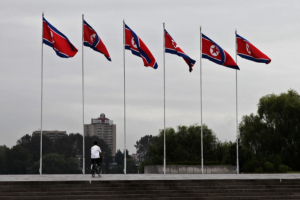 North Korea is a socialist country that maintains a free health care system influenced by the former Soviet Union. In 1947, the country’s founder introduced a free health care system. Kim Il-sung later established the Universal Free Health Care System (UFHCS) to implement it fully, achieving universal health coverage.
Initially, North Korea’s health care system operated effectively. However, it began to break down in the mid-to-late ’90s due to the Arduous March. The collapse of the Soviet Union, natural disasters and economic sanctions imposed by the U.S. and U.N. severely affected North Korea’s socioeconomic progress and public health. It led to widespread malnutrition and high mortality rates from communicable diseases.
The health care system deteriorated steadily and was unable to provide even basic services, largely because it relied entirely on government support under the socialist model.
The State of the Health Care System in North Korea
North Korea ranks lowest in East Asia and 193rd out of 195 countries worldwide. It also ranks 187th out of 195 for health care access, indicating that reasonable health care is difficult to obtain. In North Korea, the leading causes of death are stroke and ischemic heart disease.
In 2021, noncommunicable diseases accounted for the highest number of deaths. North Korea’s leader closed the country’s borders after COVID-19 emerged. Although the government officially claimed there were no recorded infections, media outlets citing sources inside the country reported COVID-19–like symptoms among soldiers.
North Korean authorities also tightly censor and control all media. While the number of articles mentioning the UFHCS remained stable between 2015 and 2018, ranging from 53 to 63 per year, the figure dropped sharply after 2019. By 2024, Rodong Sinmun no longer mentioned the UFHCS at all. Notably, the word “Inmin” (meaning “people”) also disappeared from articles.
Although hospitals in North Korea historically preserved this term, its removal signals that citizens’ inherent right to health care is no longer explicitly recognized in official discourse.
The Realities Behind North Korea’s Health Care System
According to an Amnesty International publication, despite the government’s claim of a free health care system, citizens were required to pay for medical services during the ’90s. In many cases, patients paid with cigarettes, alcohol or food even for the most basic consultations. As a result, many people avoided visiting doctors and instead went directly to markets to buy medicine.
It became especially common for North Koreans to self-medicate with addictive narcotic painkillers for minor illnesses such as the common cold. After the collapse of North Korea’s rationing system, informal markets known as jangmadang emerged as the core of the unofficial economy. However, following Kim Jong-un’s rise to power in 2012 and the outbreak of COVID-19, authorities closed borders and began shutting down these markets.
As border controls tightened and medicine shortages worsened during the COVID-19 pandemic, North Korean authorities expanded domestic production of so-called Koryo medicine, a form of traditional medicine. However, this approach proved harmful due to serious side effects. According to Daily NK, out of 163 reported medical incidents in health facilities, 130 involved drug abuse or misuse and 93 were linked specifically to side effects from Koryo medicine.
Many North Koreans were already aware of these risks. However, they continued to rely on such treatments because of severe medicine shortages. While the government attempted to address supply gaps, it created additional problems by failing to evaluate the safety and effectiveness of Koryo medicine systematically.
Aids From Nonprofits
During COVID-19, most international aid workers left North Korea after the government closed its borders and tightened import controls. This led to severe shortages of medicines and vaccines. In 2023, following a vote by the WHO’s Executive Board in favor of North Korea, U.N. agencies and NGOs sent more than four million vaccine doses to Pyongyang.
These included vaccines for hepatitis B, measles and tetanus. The primary targets were children and pregnant women who had missed life-saving vaccinations due to the COVID-19 pandemic. The vaccination drive was the result of an extended collaboration among UNICEF, Gavi and the WHO.
Roland Kupka, the then-UNICEF Acting Representative in the DPRK, stated that the return of vital vaccines marked a significant step toward protecting children’s health and survival in the country. In addition, UNICEF provided new freezers and temperature taggers to ensure vaccines could be stored safely, even in the most remote areas. Kupka also noted that, to sustain progress in restoring pre-pandemic vaccination levels and ensure every child receives vital, life-saving vaccines, DPRK authorities should allow the return of UNICEF and U.N. international staff to the country.
Final Remarks
The limitations of North Korea’s health care system are increasingly evident. Although authorities continue to claim that health care is free, shortages of food and medicine worsened after COVID-19. To cope, people relied on unofficial street markets, but these were also shut down due to government policy.
While international attention and cooperative engagement have increased, they must be matched by meaningful domestic policy efforts.
– Yunjaelee
Yunjaelee is based in Vancouver, Canada and focuses on Global Health and Politics for The Borgen Project.
Photo: Flickr
link